Source Stair Climbing Portable Stretcher for Ambulance, Rescue, and Home Use
Compare 30 models of stair climbing portable stretcher options from Chinese manufacturers. Evaluate specifications like load capacity, weight, and folding designs to find the right emergency transport solution for your procurement needs; compare the available evidence and request quotations based on your requirements.
Key considerations
Products List




Comprehensive Sourcing Guide
Stair Climbing Portable Stretcher Sourcing Guide
Stair climbing portable stretchers are specialized evacuation devices that allow a single operator or small team to move a patient down or up stairwells when a standard stretcher or stair chair cannot maneuver through confined spaces. For B2B buyers — distributors of emergency medical equipment, fire and rescue outfitters, hospital procurement teams, and workplace safety suppliers — these products sit in a category where load capacity, folding geometry, and operator ergonomics directly determine usability in an emergency. Sourcing them requires more than comparing listed prices, because the difference between a 160 kg-rated and a 200 kg-rated unit, or between an 8 kg and a 33 kg self-weight, changes who can carry it and under what conditions.
This guide structures the buying decision around the signals visible in current product listings: model families such as FC-D5, FC-D3, FC-D2, FC-A5, and SC-T004, declared load capacities between 160 kg and 200 kg, aluminum-based construction, folding designs, and certifications reported as CE, FDA, and ISO. Each section below identifies what to verify before committing to an order, so that specification sheets, samples, and commercial terms are checked systematically rather than selectively.
Product Scope and Observed Listing Signals
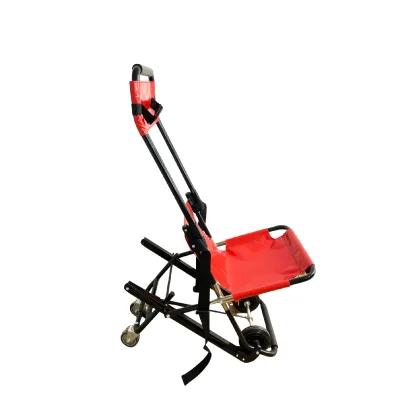
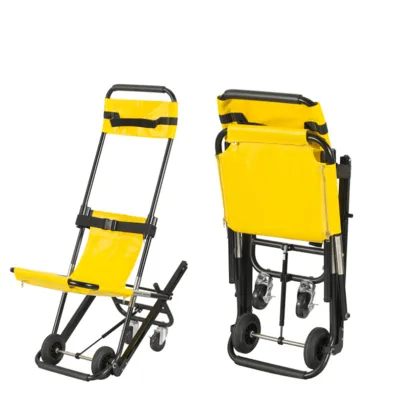
The observed listings fall into two recognizable product groups. The first is the stair chair style — models such as the FC-D5 "Stair Chair Climb Stretcher" (200 kg capability, 32 kg self-weight, two belts), the FC-D3 "Stair Chair Emergency Stretcher" (160 kg capability, 12 kg self-weight, three belts), and the FC-D2 "Stair Ambulance Wheel Chair" (8 kg self-weight) — intended for seated patient transport on stairs in ambulances and building evacuations. The second group includes longer ambulance-style stretchers such as the FC-A5 (33 kg self-weight) and the SC-T004 stair stretcher (load-bearing 181 kg, product size 165×48.5×120 cm), which use tracked or wheeled descent mechanisms for recumbent patients.
Listing signals worth reading carefully include belt count (two versus three, which affects patient restraint), folded versus non-tilted configurations, packaging described as carton-based, and package sizes ranging from 98×55×10 cm to 193×63×27 cm. Buyers should treat these attributes as observations per listing, not guarantees across a supplier's catalog, and confirm which model in a family each quoted price actually covers before comparing offers.
Technical Specifications to Verify
Start with load capacity and self-weight as a paired decision. Listings show capabilities of 160 kg (FC-D3), 181 kg (SC-T004), and 200 kg (FC-D5), with self-weights from 8 kg to 33 kg. A heavier unit with higher capacity may need two operators, while a lightweight 8–12 kg chair sacrifices capacity or features. Verify whether the declared capacity is a static load rating or an operational rating that accounts for dynamic forces during stair descent, and ask how the rating was established. For the SC-T004, the listing also states a developed size of 1340×520×780 mm and a folding size of 1100×530×230 mm with approximately 13.5 kg net and 14.5 kg gross weight — confirm these dimensions match your ambulance compartment or storage cabinet clearances.
Next, verify materials and mechanism details. Listings identify aluminum and aluminium alloy construction, which supports the stated self-weights but varies in grade and wall thickness. Ask for the belt quantity and anchor points, wheel or track design for stair edges, handle height, and folded dimensions (the FC-D3 package is 112×50×24 cm). Request dimensional drawings rather than relying on rounded catalog figures.
Compliance and Safety Documentation
Certification claims in the observed listings include CE, FDA, and ISO for some models and CE plus ISO for others, so treat certification as model-specific rather than supplier-wide. Ask each supplier to state exactly which certifications apply to the specific model and lot you are quoting, and request certificate copies that show the model number, certificate holder, and validity dates. Note that the origin listings include Foshan, Guangdong, so buyers importing into regulated markets should confirm which conformity assessment route applies to medical evacuation devices in their destination jurisdiction rather than assuming a listed CE mark covers their use case.
Beyond certificates, request documentation that supports safe operation: an instruction manual in your required languages, inspection and maintenance schedules, and a record of any load or durability testing behind the stated capability figures. For products intended for patient transport, ask whether critical components — belts, buckles, brakes, and stair-contact wheels or tracks — have their own traceability. Buyers should also clarify whether the device is classified as medical equipment, an evacuation aid, or both in their market, since this determines the documentation a distributor must retain at import and resale.
Cost Drivers and Commercial Terms
Observed listings show a wide price band from under one dollar to around $1,100, which signals that the category mixes accessories, components, and complete units — so the first commercial task is confirming that every quote refers to a complete, ready-to-deploy stretcher of the same model. Price differences among complete units are driven by capacity rating, aluminum grade, belt count, wheel or track mechanism complexity, and whether customization is applied; listings indicate customization is available, which typically affects both unit cost and production time. Folding mechanisms and higher-capacity frames add material and assembly cost.
On commercial terms, observed MOQs range from 1 to 1,000 units, so clarify whether a single-unit sample price, a small trial order, and a volume price follow different schedules. Confirm packaging — listings describe carton packing, with the FC-D5 packed at 116×58×32 cm — and how many units fit per carton and per shipping container, since bulky folded dimensions raise freight cost per unit. Agree in writing on Incoterms, payment structure, what happens on defect discovery, and whether spare parts such as wheels and belts are supplied alongside the initial order.
Supplier Qualification and Quality Control
Because the category includes suppliers of varying depth, qualify vendors by product rather than by company reputation alone. Ask for evidence that the supplier manufactures the models quoted — FC-D2 through FC-D5, FC-A5, and SC-T004 — or clearly discloses a trading role, since warranty and spare-part responsibilities differ. Request factory information covering production of aluminum welded frames, surface treatment, and assembly of stair-contact mechanisms, and ask which quality processes apply at incoming material, welding, and final inspection stages. A supplier stating CE or ISO certification should be able to explain the scope of those certificates for stretcher production.
For quality control, define an inspection plan before ordering: verify declared dimensions (for example, the 190×55×80 cm standard cited for the FC-A5), self-weight within tolerance, belt count and stitching, wheel or track function over repeated cycles, and folding operation. Conduct pre-shipment inspection on first orders and any order above sample quantity, checking load capacity documentation against the stated 160–200 kg range. Keep a retained sample from the approved batch so later reorders can be compared against a physical reference, not only photographs.
Long-Term Procurement Checks
Plan for the after-sales life of the product, because stair stretchers operate in abrasive, high-load conditions where wheels, tracks, belts, and folding latches wear first. Before committing to a supplier, confirm the availability and pricing of spare parts for each model, whether repair guides are provided, and how replacement components are identified — model numbers such as SC-T004 should map to a stable parts list. Ask how design revisions are communicated, since a silent change to belt anchors or wheel diameter can affect compatibility with your installed fleet and training materials.
Institutionalize reorder discipline: record the exact model, capacity rating, dimensions, certification copies, and inspection results for every accepted batch, and require the supplier to reconfirm these on each new quotation. Periodically re-verify that certifications remain valid and cover the current production version, and re-run functional checks on samples from new lots rather than relying on prior approvals. For buyers distributing into multiple markets, review whether certification and classification requirements have changed since the initial import, and refresh training materials whenever the supplier revises the operating manual.
Stair Climbing Portable Stretcher Sourcing Checklist
Consolidate the decision into a written checklist before approaching suppliers. Confirm the model and its exact specification — capacity between the listed 160 kg and 200 kg ratings, self-weight, folded and deployed dimensions, belt count, and material — and match these against your storage and vehicle constraints. Verify which certifications (CE, FDA, ISO) genuinely apply to that model, obtain certificate copies, and confirm the compliance route for your destination market. Agree commercial terms that separate sample, trial, and volume pricing within the observed 1–1,000 unit MOQ range, and define packaging, freight, and spare-part supply in the contract.
Then execute quality control as a standing process: sample approval with retained references, pre-shipment inspection against a documented checklist, and periodic re-verification of certifications and design revisions. Buyers who treat these listings as observations to confirm — rather than claims to trust — will find that the stair climbing portable stretcher category offers workable options across ambulance, fire, and facility evacuation roles, provided capacity, weight, and documentation are verified model by model before each order.
FAQs
How much weight can a stair climbing portable stretcher carry?
Listed models show load capacities ranging from 160kg to 200kg, with the FC-D5 rated at 200kg and the FC-D3 at 160kg. One aluminum alloy model lists a load-bearing of 181kg. Always confirm the rated capacity on the specific model specification sheet before purchase, since capacity varies by frame design, material, and belt configuration.
What certifications do these stair stretcher products have?
The listed products carry CE and ISO certification, and some models also show FDA certification. Certification coverage differs between individual models, so buyers should request the applicable CE, ISO, and FDA documents for the exact model and batch being ordered. Confirming certificates before shipment helps ensure compliance with medical device import requirements.
Can the stair chair stretcher be customized for specific needs?
Yes, customization is available on the listed products, which also show a customized attribute flag. Buyers can typically discuss requirements such as color, belt number, and configuration with the supplier. Because customization scope and approval details vary by model, confirm the agreed customization options and specifications in writing before placing the production order.
What materials are used in these stair climbing stretchers?
The listed products are made of aluminum, aluminium alloy, or metal, giving a combination of strength and manageable weight. Self weights range from about 8kg to 33kg depending on the model, which affects handling on stairs. Aluminum alloy construction is common for ambulance and rescue equipment because it resists corrosion while supporting rated patient loads.
How many belts does each stair chair model include?
The listed stair chair models show either two belts or three belts. Belt count affects how securely a patient is held during stair transport, especially for stair chair configurations where the patient sits upright. Choose the belt configuration based on your rescue protocols, and confirm the exact belt setup for the model variant you intend to order.
Is the stair climbing portable stretcher foldable for storage?
Yes, the listed products show folded or folding attributes, and one model lists a folding size of 1100 by 530 by 230mm against a developed size of 1340 by 520 by 780mm. Folding reduces the space needed in ambulances and storage rooms. Check the folded dimensions of your chosen model to confirm it fits your vehicle compartments and storage racks.
What packaging can buyers expect for these stretcher products?
The listed products show carton packaging, with package sizes such as 116 by 58 by 32cm for the FC-D5 and 112 by 50 by 24cm for the FC-D3. Cartons suit consolidated freight and warehouse handling. If you need specific labeling, export cartons, or palletized packing for sea freight, discuss packaging requirements with the supplier before shipment.
Where are these stair stretcher products manufactured?
The listed products originate from China, with one supplier listing Foshan, Guangdong as the origin. China is a major production base for ambulance and rescue stretcher equipment. When sourcing, confirm the actual shipping origin, export documentation, and certification paperwork for the specific factory producing your order to avoid discrepancies.